Saturday, March 17, 2012
Top Five Mostly Used Mobile Phones in India
Mobile phones are becoming part of a person's life. Back in late 90's, mobile phone was a luxury and only "Rich" people could afford it but now time has changed and even the tea stall owner or rickshaw driver can afford a mobile phone. I think to have a mobile phone in India is now a necessity.
India is pumping millions of mobile subscribers every month and now I think India has more mobile subscribers than landlines. So what mobile phones are popular in India?
Recently, Opera released a report for Opera Mini revealing the top 10 sites accessed from cell phones and also, the top 10 handsets used for accessing the sites. Here’s the list of the top 5 mobile phones used in India as per Opera Mini’s report for June 2008 –
India is pumping millions of mobile subscribers every month and now I think India has more mobile subscribers than landlines. So what mobile phones are popular in India?
Recently, Opera released a report for Opera Mini revealing the top 10 sites accessed from cell phones and also, the top 10 handsets used for accessing the sites. Here’s the list of the top 5 mobile phones used in India as per Opera Mini’s report for June 2008 –
- Nokia N70
- Nokia N73
- Nokia 6233
- Nokia 6600
- Nokia 3110c

Five New Entry Level Handsets launched by Motorola
Motorola has recently made an addition to its existing range of MOTOYUVA brand with the launch of 5 new mobile phone models which will be the entry level handsets. These mobile phones are named as MOTOYUVA WX181, MOTOYUVA WX260, MOTOYUVA WX265, MOTOYUVA WX290 and MOTOYUVA WX295. These latest mobile phones will be loaded with all needed features like that of capturing images, texting, talking, listening to music and others at an affordable price.
The Motorola Devices & Home Vice president of Marketing, Andrew Morley stated that “The aim was to meet the changing needs of our Indian consumers and make mobile communication available to the widest possible audience.”
The recently launched MOTOYUVA WX range from the company will come loaded with features like Bluetooth, expandable memory up to 2GB so that you can store all your data, FM radio, digital camera, GPRS and integrated torch light.
These latest handsets from Motorola are launched with affordable price tags ranging between Rs.1490 to Rs.2890.
The Motorola Devices & Home Vice president of Marketing, Andrew Morley stated that “The aim was to meet the changing needs of our Indian consumers and make mobile communication available to the widest possible audience.”
The recently launched MOTOYUVA WX range from the company will come loaded with features like Bluetooth, expandable memory up to 2GB so that you can store all your data, FM radio, digital camera, GPRS and integrated torch light.
These latest handsets from Motorola are launched with affordable price tags ranging between Rs.1490 to Rs.2890.
Nokia Launches Its Cheapest Phone Yet for Emerging Markets
Nokia has unveiled the 1280, a mobile phone for emerging markets that is 20 percent cheaper than its predecessor, the 1202.
The unsubsidized cost of the 1280 is €20 (US$30), which makes it Nokia's cheapest mobile phone yet, according to a Nokia blog post. But the prize squeeze won't end there: The concept of a €5 mobile phone doesn't seem so far fetched, the blog post said.
The difference between mobile phone markets is the Western world and developing countries is stark. In the U.S. the average monthly revenue per user was approximately US$51 last year, compared to about US$6.40 in India, according to data from IE Market Research and Research and Markets. That doesn't leave much room for local Indian operators to subsidize expensive smartphones. Instead users have to pay for the phone themselves, and in a country where the average annual per capita income is about US$805 that isn't much. So phones like the 1280 are needed.
The 1280 offers a talk time of up to 8.5 hours -- 30 minutes less than the 1202, according to Nokia -- and a flashlight. Both are important features when you live in a part of the world where power isn't readily available, Nokia said.
The 1280 may have a shorter battery life than the 1202, but the phone can store more contacts, 500 versus 200 entries, and it adds an FM-radio with a standard 3.5 millimeter stereo headphone jack. It also has five separate phone books, which should make it simpler for people to share the device.
Besides the 1280 Nokia, has unveiled four other phones for emerging markets: the 1616, the 1800, the 2220 slide and the 2690. The 1616 adds a color display and €4 to the price of the 1280. The 2220 slide adds support for mobile e-mail using Nokia's own Ovi Mail and costs €45.
Support for Nokia Life Tools is something all phones have in common. Life Tools is a set of services that lets consumers in small towns and rural areas to subscribe to agriculture, education and entertainment related information and content. It's already available in India, and will be available across Indonesia from early December, Nokia said.
The 2220 will be the first of the new phones to ship, before the end of this year, with the 1280 shipping in the first quarter next year, Nokia said.
Read more »
The unsubsidized cost of the 1280 is €20 (US$30), which makes it Nokia's cheapest mobile phone yet, according to a Nokia blog post. But the prize squeeze won't end there: The concept of a €5 mobile phone doesn't seem so far fetched, the blog post said.
The difference between mobile phone markets is the Western world and developing countries is stark. In the U.S. the average monthly revenue per user was approximately US$51 last year, compared to about US$6.40 in India, according to data from IE Market Research and Research and Markets. That doesn't leave much room for local Indian operators to subsidize expensive smartphones. Instead users have to pay for the phone themselves, and in a country where the average annual per capita income is about US$805 that isn't much. So phones like the 1280 are needed.
The 1280 offers a talk time of up to 8.5 hours -- 30 minutes less than the 1202, according to Nokia -- and a flashlight. Both are important features when you live in a part of the world where power isn't readily available, Nokia said.
The 1280 may have a shorter battery life than the 1202, but the phone can store more contacts, 500 versus 200 entries, and it adds an FM-radio with a standard 3.5 millimeter stereo headphone jack. It also has five separate phone books, which should make it simpler for people to share the device.
Besides the 1280 Nokia, has unveiled four other phones for emerging markets: the 1616, the 1800, the 2220 slide and the 2690. The 1616 adds a color display and €4 to the price of the 1280. The 2220 slide adds support for mobile e-mail using Nokia's own Ovi Mail and costs €45.
Support for Nokia Life Tools is something all phones have in common. Life Tools is a set of services that lets consumers in small towns and rural areas to subscribe to agriculture, education and entertainment related information and content. It's already available in India, and will be available across Indonesia from early December, Nokia said.
The 2220 will be the first of the new phones to ship, before the end of this year, with the 1280 shipping in the first quarter next year, Nokia said.
iPhone Theme Mobile Commerce for the Masses?
Magento Commerce, an open source ecommerce platform, has introduced an Apple iPhone specific theme that is potentially the first step toward leveling the playing field for small online retailers who want to compete in the lucrative and booming mobile e-commerce market.

Mobile eCommerce Has Massive Potential
Mobile ecommerce (often call m-commerce) is coming; 9 million Americans have already made a purchase from a mobile device, and perhaps half of the United States' 250 million odd mobile handset users are willing to make a purchase in the near future, according to a recent study from The Nielsen Company, New York, N.Y. All of those U.S. users plus the billions of consumers in Asia, Africa, and India, where a mobile handset may serve as phone, mobile TV, and primary point of Internet access, make m-commerce very attractive to e-retailers large and small.
But mobile browsing experiences can be frustrating for customers, and developing ecommerce websites that are functional, legible, and compelling for mobile device users has been the realm of moneyed and massive e-retailers like Amazon.com.
The Apple iPhone actually does an excellent job of rendering websites already, but there are still problems. Most online stores are designed to look good on a modern, flat-panel monitor which may be 19 inches in diagonal. While these sites are rendered properly on the iPhone, they take on diminutive dimensions, requiring an iPhone owner to zoom in, zoom out, and scroll in all directions. Bandwidth can also be a problem. iPhones use WiFi connections (802.11n standard), Bluetooth (radio), fast 3G cellular networks, or older and slower cellular networks depending on what sort of connection is available at a given time. Browsing on WiFi or a speedy 3G network might be no problem, but uploading an online store over older cellular networks can be painfully slow.
To address this, Magento developed a special theme or combination of layout, template, and presentation files that are optimized for an iPhone's browser. This theme still offers great looking graphics, full functionality, and the same payment gateways, but in proportions and layouts that make a store attractive and easy to use on an iPhone's palm-sized LCD screen.
Equalizing m-Commerce
Magento's new iPhone theme is an important (if small) step, giving independent e-retailers an easy way to tap m-commerce's amazing potential. Varien, a Los Angeles, Calif.-based ecommerce developer and consultancy, created Magento Commerce and then unleashed the platform, turning it over to a vibrant community of perhaps 400,000 users (store owners and developers), while staying intimately involved in the platform's development and expansion. The new theme makes it easier for iPhone users to browse and shop Magento-powered sites with ease. Basically, Magento utilizes "the iPhone's inherent navigation methods and offer[s] quick catalog browsing, global site search, customer accounts, and a shopping cart with a complete checkout process," Varien said, "The iPhone extension delivers a user experience that supports the iPhone's touch-screen functionality, taking users on a clearly defined path from browsing to purchasing."
The iPhone is Just a Drop in the Bucket
Unfortunately, as awesome, cool, and fantastic as the iPhone may or may not be, it represents a very tiny percentage of the total mobile handset universe. By some estimates, leading mobile phone makers Nokia, Motorola, Samsung, LG, Sony-Ericsson, BlackBerry, and the like, build between 700 million and 1 billion new mobile handsets each year. While something like 8 million to 10 million iPhones have sold worldwide based on Steve Jobs 2008 MacWorld keynote speech and estimates for the iPhone 3G. So the new Magento iPhone theme only scratches the m-commerce surface. On the other hand, what e-retailer wouldn't want to reach as many as 10 million or so potential customers all of whom represent the iPhone's decidedly upscale user base.
Using the iPhone Theme to Gain a Competitive Advantage.
m-Commerce is here to stay, and retailers who implement a mobile solution like Magento's iPhone extension will gain a competitive advantage over other ecommerce sites that are slower to adopt a mobile-specific platform. And there is still hope that Varien or other ecommerce developers will address the mobile mass market soon.
“We are looking to expand the capabilities of Magento to target additional mobile browsers in the future, but the iPhone, with its smart usability, market share and passionate audience was a natural place to start,” said Chris Marshall, a Varien spokesman.
Read more »

Mobile eCommerce Has Massive Potential
Mobile ecommerce (often call m-commerce) is coming; 9 million Americans have already made a purchase from a mobile device, and perhaps half of the United States' 250 million odd mobile handset users are willing to make a purchase in the near future, according to a recent study from The Nielsen Company, New York, N.Y. All of those U.S. users plus the billions of consumers in Asia, Africa, and India, where a mobile handset may serve as phone, mobile TV, and primary point of Internet access, make m-commerce very attractive to e-retailers large and small.
But mobile browsing experiences can be frustrating for customers, and developing ecommerce websites that are functional, legible, and compelling for mobile device users has been the realm of moneyed and massive e-retailers like Amazon.com.
The Apple iPhone actually does an excellent job of rendering websites already, but there are still problems. Most online stores are designed to look good on a modern, flat-panel monitor which may be 19 inches in diagonal. While these sites are rendered properly on the iPhone, they take on diminutive dimensions, requiring an iPhone owner to zoom in, zoom out, and scroll in all directions. Bandwidth can also be a problem. iPhones use WiFi connections (802.11n standard), Bluetooth (radio), fast 3G cellular networks, or older and slower cellular networks depending on what sort of connection is available at a given time. Browsing on WiFi or a speedy 3G network might be no problem, but uploading an online store over older cellular networks can be painfully slow.
To address this, Magento developed a special theme or combination of layout, template, and presentation files that are optimized for an iPhone's browser. This theme still offers great looking graphics, full functionality, and the same payment gateways, but in proportions and layouts that make a store attractive and easy to use on an iPhone's palm-sized LCD screen.
Equalizing m-Commerce
Magento's new iPhone theme is an important (if small) step, giving independent e-retailers an easy way to tap m-commerce's amazing potential. Varien, a Los Angeles, Calif.-based ecommerce developer and consultancy, created Magento Commerce and then unleashed the platform, turning it over to a vibrant community of perhaps 400,000 users (store owners and developers), while staying intimately involved in the platform's development and expansion. The new theme makes it easier for iPhone users to browse and shop Magento-powered sites with ease. Basically, Magento utilizes "the iPhone's inherent navigation methods and offer[s] quick catalog browsing, global site search, customer accounts, and a shopping cart with a complete checkout process," Varien said, "The iPhone extension delivers a user experience that supports the iPhone's touch-screen functionality, taking users on a clearly defined path from browsing to purchasing."
The iPhone is Just a Drop in the Bucket
Unfortunately, as awesome, cool, and fantastic as the iPhone may or may not be, it represents a very tiny percentage of the total mobile handset universe. By some estimates, leading mobile phone makers Nokia, Motorola, Samsung, LG, Sony-Ericsson, BlackBerry, and the like, build between 700 million and 1 billion new mobile handsets each year. While something like 8 million to 10 million iPhones have sold worldwide based on Steve Jobs 2008 MacWorld keynote speech and estimates for the iPhone 3G. So the new Magento iPhone theme only scratches the m-commerce surface. On the other hand, what e-retailer wouldn't want to reach as many as 10 million or so potential customers all of whom represent the iPhone's decidedly upscale user base.
Using the iPhone Theme to Gain a Competitive Advantage.
m-Commerce is here to stay, and retailers who implement a mobile solution like Magento's iPhone extension will gain a competitive advantage over other ecommerce sites that are slower to adopt a mobile-specific platform. And there is still hope that Varien or other ecommerce developers will address the mobile mass market soon.
“We are looking to expand the capabilities of Magento to target additional mobile browsers in the future, but the iPhone, with its smart usability, market share and passionate audience was a natural place to start,” said Chris Marshall, a Varien spokesman.
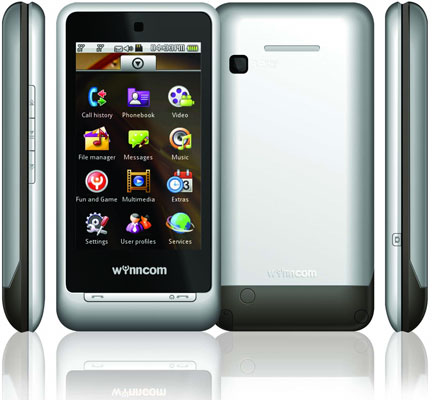
Wynncom Unveils Affordable Touch Phone - Y100
Wynncom Mobiles has launched a new phone for those who are budget-conscious, but still want a stylish 3.0-inch touch screen phone - Y100. This stylish metallic dual band (900 MHz/ 1800 MHz), dual-SIM (GSM+GSM) handset supports memory expandable up to 32GB, a 3.2MP camera with video recording and needless to say, an MP3 player to keep you entertained wherever you go. A built-in photo editor lets you edit photos on the phone.

The Y100 will appeal even more to people whose relatives work abroad because now you can instantly send free SMS's not only across India, but also to UAE, Kuwait, Saudi Arabia, Singapore, Malaysia and Philippines using the in-built soft key provided for 160by2 Free Mobile Phone Applications provider.
Some of the other features in this phone include Shared Phonebook, Stereo speakers, FM radio, Social networking support with Facebook and Twitter, Games, File Protection, Answering Machine, Bluetooth with A2DP, Mobile Tracker, DUN, HID, HSP, HFP and FTP. The phone claims to have a talk time of over 6 hours. With a video player supporting MP4 playback, it seems to provide good entertainment value.
The Wynncom Y100 is available at retail outlets at an attractive MOP of Rs. 4,495.
The Y100 will appeal even more to people whose relatives work abroad because now you can instantly send free SMS's not only across India, but also to UAE, Kuwait, Saudi Arabia, Singapore, Malaysia and Philippines using the in-built soft key provided for 160by2 Free Mobile Phone Applications provider.
Some of the other features in this phone include Shared Phonebook, Stereo speakers, FM radio, Social networking support with Facebook and Twitter, Games, File Protection, Answering Machine, Bluetooth with A2DP, Mobile Tracker, DUN, HID, HSP, HFP and FTP. The phone claims to have a talk time of over 6 hours. With a video player supporting MP4 playback, it seems to provide good entertainment value.
The Wynncom Y100 is available at retail outlets at an attractive MOP of Rs. 4,495.
Samsung I9000 Galaxy S

The strongest Android phone currently on the planet, Samsung I9000 Galaxy S, has hit the Indian shores. The Samsung I9000 Galaxy S has the biggest Super AMOLED screen in the market with a size of 4 inches. The Galaxy S is available in two versions, 8GB and 16GB. But I have only seen the 16GB in the Indian market (Kolkata).
The Samsung I9000 Galaxy S has a 4″ Super AMOLED capacitive screen with WVGA (800 x 480) resolution. As usual, a 3.5mm slot is present. The phone has a inbuilt memory of 8GB / 16GB, depending on the version you purchase. The external microSD slot is expandable up to 32GB. The Galaxy S has a healthy 512MB RAM and 2GB ROM.
The Galaxy has supports both 2G (GPRS: Class 12 (4+1/3+2/2+3/1+4 slots), 32 – 48 kbps EDGE: Class 12) and 3G (HSDPA, 7.2 Mbps; HSUPA, 5.76 Mbps) connectivity. Wi-Fi 802.11 b/g/n with DLNA support is also present. The Bluetooth version on Galaxy S is 3.0 with A2DP support.
The camera is the only weak point in Galaxy S along with the plastic build. The camera is of 5MP resolution with autofocus but no flash at all. The video is recorded at HD (720P) resolution at 30fps. A secondary camera for video chatting is also present with VGA resolution.
The Android version on Galaxy S is 2.1 (Eclair). The processor inside is one of the best in the market, ARM Cortex A8 Hummingbird processor with a clock speed of 1Ghz. The processor is based on 45nm fabrication process. Stereo FM Radio with RDS support is also present. GPS with aGPS and Digital Compass support is also present. The video player on Galaxy S supports codec like .avi, Divx, .mkv, which is excellent according to me.
The battery power is of 1500mAh Li-Po battery. The battery performance on Galaxy S is excellent, in fact second best after Samsung Wave. The Galaxy S is available in Black and Grey. The price of Samsung I9000 Galaxy S is INR 28500 (US $608).
The Samsung I9000 Galaxy S has a 4″ Super AMOLED capacitive screen with WVGA (800 x 480) resolution. As usual, a 3.5mm slot is present. The phone has a inbuilt memory of 8GB / 16GB, depending on the version you purchase. The external microSD slot is expandable up to 32GB. The Galaxy S has a healthy 512MB RAM and 2GB ROM.
The Galaxy has supports both 2G (GPRS: Class 12 (4+1/3+2/2+3/1+4 slots), 32 – 48 kbps EDGE: Class 12) and 3G (HSDPA, 7.2 Mbps; HSUPA, 5.76 Mbps) connectivity. Wi-Fi 802.11 b/g/n with DLNA support is also present. The Bluetooth version on Galaxy S is 3.0 with A2DP support.
The camera is the only weak point in Galaxy S along with the plastic build. The camera is of 5MP resolution with autofocus but no flash at all. The video is recorded at HD (720P) resolution at 30fps. A secondary camera for video chatting is also present with VGA resolution.
The Android version on Galaxy S is 2.1 (Eclair). The processor inside is one of the best in the market, ARM Cortex A8 Hummingbird processor with a clock speed of 1Ghz. The processor is based on 45nm fabrication process. Stereo FM Radio with RDS support is also present. GPS with aGPS and Digital Compass support is also present. The video player on Galaxy S supports codec like .avi, Divx, .mkv, which is excellent according to me.
The battery power is of 1500mAh Li-Po battery. The battery performance on Galaxy S is excellent, in fact second best after Samsung Wave. The Galaxy S is available in Black and Grey. The price of Samsung I9000 Galaxy S is INR 28500 (US $608).

Features:
Network: HSUPA 900/1900/2100EDGE/GPRS 850/ 900/1800/1900
Dimension: 64.2 X 122.4 X 9.9 mm (119g)
Display: 4.0” WVGA(480x800) 16M SUPER AMOLEDmDNIe(Mobile Digital Natural Image engine)
Samsung Android 2.1 (Eclair)Samsung Apps / Android MarketVarious applications downloadable
Social Hub:Integrates SNS, email, and calendar accounts
Android Samsung UI:Multiple HomescreensHybrid WidgetsSamsung I9000 Galaxy S
Processor:1GHz CPU SpeedBattery (Standard) Li-pol, 1,500mAh
Talk time : 2G/ 769 minutes, 3G/ 391 minutesStandby : 2G/ 750 hours, 3G/ 625 hours
Camera:5.0 Megapixel AF cameraSelf Shot, Action Shot, Add me, Cartoon Shot, Smile Shot
Video:HD Video Player & Recorder (1280 x 720) @ 30fpscodec: DivX, XviD, MPEG4, H.263, H.264, WMV, VC-1format: 3gp(mp4), AVI(divx), MKV, FLV, H.263Sorenson
Music:Music Player with SoundAlive3.5mm Ear JackMP3/AAC/AAC+/eAAC+/OGG/WMA/AMR-NB/AMR-WB/WAV/MID/AC3/IMY/FLAC/XMF

Memory:16GB/8GB+ MicroSD(Up to 32GB)
Android Browser: Flash Lite3.1, RSS reader
Multi-touch zoom
Light sensor: Accelerometer sensor, Proximity Sensor, Digital Compass
Additional Features: Layar Reality Browser powered by Tele AtlasSwype, Write & GoThinkFreeAldiko e-book
Android Browser: Flash Lite3.1, RSS reader
Multi-touch zoom
Light sensor: Accelerometer sensor, Proximity Sensor, Digital Compass
Additional Features: Layar Reality Browser powered by Tele AtlasSwype, Write & GoThinkFreeAldiko e-book
Friday, March 16, 2012
Google says no to voice facility launch in India
A couple of months after internet search engine Google launched Google Voice-its service allowing internet to mobile phone calls, the company today said the service could not be launched in India due to legal constraints.
“While India is a key market for us, product-wise, and despite the fact that Google Voice is slated to be an important part of our portfolio, we will not launch it here, because of restrictions laid by law,” said Vinay Goel, head of products, Google India.
According to Clause 1(14) of the revised license scheme of internet telephony services launched by the Telecom Regulatory Authority of India (TRAI), voice over internet calls are allowed in three situation:
First, if the calls emanate from a personal computer (PC) in India to a PC outside the country; second, where a PC in India is used to call a telephone outside India; and third, from an IP-based H.323/SIP Terminal in India to similar terminals in India and abroad.
This means that while users would be allowed to call telephones outside the country, calling telephone users within India is a problem.
“So, while launching the service is legal, and acceptable, at best it would be a half-service because users would not be allowed to make PC to telephone calls within the country. We do not see any justification in launching a half-service,” Goel said.
Google eyes mobile internet users
On the back of a three-fold growth in internet users in India and the growing smart phone market, Google has set its sight on mobile phone internet users. “Going forward in the Indian market, Google will increasingly customise products to suit users on mobile phones. We have, for example, customised Google Instant as a phone application,” Goel said.
According to the company’s assessments, the primary factors driving growth of mobile internet users would be the fact that India boasts of some of the cheapest internet data plans across the world. Added to this, increasing SmartPhone penetration especially with the arrival of the sub-10, 000 category would boost the market as well.
“India currently has about 100 million internet users, about 10 per cent of the overall population, which means there is a huge unexplored market,” Goel said.
“While India is a key market for us, product-wise, and despite the fact that Google Voice is slated to be an important part of our portfolio, we will not launch it here, because of restrictions laid by law,” said Vinay Goel, head of products, Google India.
According to Clause 1(14) of the revised license scheme of internet telephony services launched by the Telecom Regulatory Authority of India (TRAI), voice over internet calls are allowed in three situation:
First, if the calls emanate from a personal computer (PC) in India to a PC outside the country; second, where a PC in India is used to call a telephone outside India; and third, from an IP-based H.323/SIP Terminal in India to similar terminals in India and abroad.
This means that while users would be allowed to call telephones outside the country, calling telephone users within India is a problem.
“So, while launching the service is legal, and acceptable, at best it would be a half-service because users would not be allowed to make PC to telephone calls within the country. We do not see any justification in launching a half-service,” Goel said.
Google eyes mobile internet users
On the back of a three-fold growth in internet users in India and the growing smart phone market, Google has set its sight on mobile phone internet users. “Going forward in the Indian market, Google will increasingly customise products to suit users on mobile phones. We have, for example, customised Google Instant as a phone application,” Goel said.
According to the company’s assessments, the primary factors driving growth of mobile internet users would be the fact that India boasts of some of the cheapest internet data plans across the world. Added to this, increasing SmartPhone penetration especially with the arrival of the sub-10, 000 category would boost the market as well.
“India currently has about 100 million internet users, about 10 per cent of the overall population, which means there is a huge unexplored market,” Goel said.
Subscribe to:
Posts (Atom)